
Climatic and Environmental Change (CCEC)
The Union Commission on Climatic and Environmental Change (CCEC) was established by the Executive Committee of IUGG in 2012 in order to promote the advancement of scientific understanding of climatic and environmental change, to boost research in reducing uncertainties in climate and environmental models, to define criteria for collaborative trans-disciplinary research on climate and environmental change, to fulfill the objectives of IUGG and its associations, to provide an all-Union perspective on climatic and environmental change, and to make available the knowledge and insights developed through scientific research to the benefit of society and planet Earth, including consideration of the science of global change, related vulnerability and impacts, and potential responses.
CCEC provides a focus for IUGG scientific expertise in climate and environment related areas across the breadth of all IUGG disciplines and associations. CCEC enables the breadth of IUGG expertise to be brought to bear at the global level through collaborating with, and underpinning the work of ISC and other international organizations.
It also enables the geographic spread of IUGG expertise to be brought to bear at the local level through involvement with national bodies in the organization of meetings and other activities.
Objectives:
Learn more about the CCEC:
CCEC was established by the Executive Committee of IUGG in 2012. It provides a focus for IUGG scientific expertise in climate and environment related areas across the breadth of all IUGG disciplines and associations. CCEC enables the breadth of IUGG expertise to be brought to bear at the global level through collaborating with, and underpinning the work of ISC and other international organizations. From 2012 to 2014 CCEC ran a major project on Food Security, in co-operation with other ISC unions, that is documented in the monograph by Cambridge University Press called Global Change and Future Earth: A Geoscience Perspective.
Fourth CCEC Executive Committee (2024-2027)
Chair: Jianping Li (CHINA)
Vice-Chair: Keith Alverson (CANADA/USA, 2024-2025)
Secretary-Treasurer: Tonie Van Dam (USA)
Immediate Past Chair: Tom Beer (AUSTRALIA)
Commission Members:
Keith Alverson (CANADA, IAMAS, 2026-2027), Harry Bryden (UK, IAPSO), Mark Clilverd (UK, IAGA), Torsten Dahm (Germany, IASPEI, 2026-2027), Annette Eicker (GERMANY, IAG), Domenico Giardini (SWITZERLAND, IASPEI, 2024-2025), Andrew Mackintosh (AUSTRALIA, IACS), Alberto Montanari (ITALY, IAHS), Joyce Penner (USA, IAMAS, 2024-2025), Alan Robock (USA, IAVCEI), Dan Rosbjerg (DENMARK, IAHS)
Third CCEC Executive Committee (2020-2023)
Chair: Jianping Li (CHINA)
Vice-Chair: Keith Alverson (USA/JAPAN)
Secretary-Treasurer: Tonie Van Dam (USA/LUXEMBOURG)
Immediate Past Chair: Tom Beer (AUSTRALIA)
Commission Members:
Harry Bryden (UK, IAPSO), Mark Clilverd (UK, IAGA), Annette Eicker (GERMANY, IAG), Domenico Giardini (SWITZERLAND, IASPEI), Andrew Mackintosh (AUSTRALIA, IACS), Alberto Montanari (ITALY, IAHS), Joyce Penner (USA, IAMAS), Alan Robock (USA, IAVCEI), Dan Rosbjerg (DENMARK, IAHS)
Second CCEC Executive Committee (2016-2019)
Chair: Tom Beer (AUSTRALIA)
Vice Chair: Jianping Li (CHINA)
Secretary-Treasurer: Keith Alverson (USA/KENYA)
Executive Committee Members:
Ian Allison (AUSTRALIA, IACS), Harry Bryden (UK, IAPSO), Eigil Friis-Christensen (DENMARK, IAGA), Domenico Giardini (SWITZERLAND, IASPEI), Michael C. MacCracken (USA, IAMAS), Setsuya Nakada (JAPAN, IAVCEI), Dan Rosbjerg (DENMARK, IAHS), Stephen Self (USA/UK, IAVCEI), Michael G. Sideris (CANADA, IAG), Makoto Taniguchi (JAPAN, IAHS), Tonie Van Dam (LUXEMBOURG, IAG), Guoxiong Wu (CHINA, IAMAS),
Co-opted Member: Serhat Sensoy (TURKEY, WMO)
First CCEC Executive Committee (2012-2015)
Chair: Tom Beer (AUSTRALIA)
Vice Chair: Jianping Li (CHINA)
Secretary-Treasurer: Keith Alverson (KENYA)
Executive Committee Members:
Michael Sideris (CANADA, IAG), Tonie van Dam (LUXEMBOURG, IAG), Eigil Friis-Christensen (DENMARK, IAGA), Dan Rosbjerg (DENMARK, IAHS), Makoto Taniguchi (JAPAN, IAHS), Michael MacCracken (USA, IAMAS), Guoxiong Wu (CHINA, IAMAS), Lawrence Mysak (CANADA, IAPSO), Ian Allison (AUSTRALIA, IACS), Setsuya Nakada (JAPAN, IAVCEI), Stephen Self (USA/UK, IAVCEI)
Co-opted Member: Serhat Sensoy (TURKEY, WMO)
The issues of drought, wildfire and institutional responses to them are becoming more important as the climate changes and heat waves become more frequent. Australia learnt in 1939 that wildfires, especially catastrophic wildfires, exceed the capacity of local fire brigades. The Stretton Royal Commission recommended the establishment of State-wide fire-fighting capability.
Such lessons from one part of the world are becoming more applicable in other parts of the world as catastrophic fires become more frequent, cover larger areas, and impact more people and more houses. The immediate response involves fire-fighting, rescue and recovery. Each of these impacts, as well as the secondary and longer term impacts, require detailed scientific study.
The symposium seeks to commence scientific consideration of whether climate change is likely to lead to a tipping point whereby regions in which catastrophic fires have hitherto been rare (such as Hungary), will find that they become more frequent and possibly catastrophic.
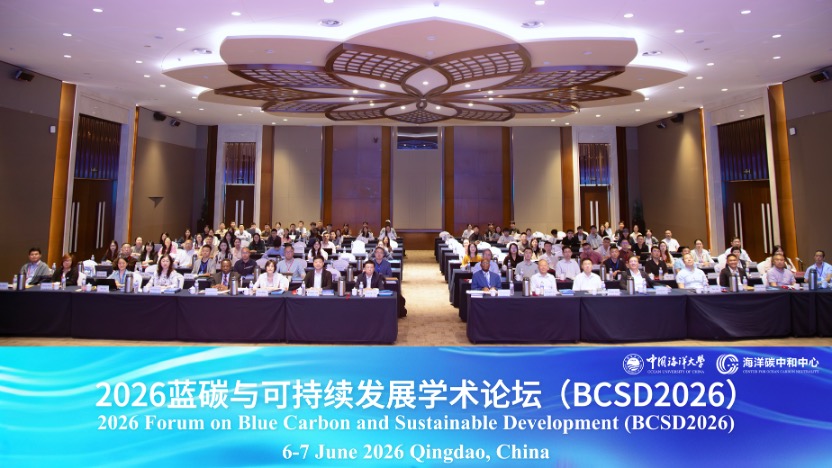
The 2026 Forum on Blue Carbon and Sustainable Development (BCSD2026), co-sponsored by the IUGG Union Commission on Climatic and Environmental Change (CCEC) and hosted by Ocean University of China, was held during June 6-7 in Qingdao, China. Jianping Li, the Chair of the CCEC, is the Director of the Carbon Neutrality Center and played a key role in organizing the forum. The forum brought together approximately 130 participants from more than 10 countries, including China, the United States, the United Kingdom, France, South Korea, Indonesia, and Singapore, comprising experts, scholars, and student representatives. Over the two-day event, attendees focused on the theme of „Blue Carbon and Global-Regional Sustainable Development,“ discussing topics such as blue carbon and climate change, blue governance and ocean health under carbon neutrality, and blue carbon finance.
Distinguished speakers included Justin Ahanhanzo (retired IOC-UNESCO specialist), Yang Haiyong (Deputy Director of the financial committee of the CPC Shandong Provincial Committee), Lu Guangzhi (Deputy Party Secretary of the Ocean University of China), and 19 experts from leading institutions worldwide. The forum aimed to deepen multilateral exchanges and cooperation, integrate global intellectual resources, and jointly contribute blue solutions to global sustainable development. The event received wide media coverage, including a report by China Daily.
IUGG is one of IPCC Observer Organizations. Prof. Jianping Li, Chair of CCEC, serves as the IUGG Liaison Officer to the IPCC for the term 2023–2027. In this capacity, he was invited to attend the 64th Session of the IPCC in Bangkok, Thailand, from 24 to 27 March 2026. The session addressed critical elements of the seventh assessment cycle, including the pending decision on timelines for the three Working Group contributions, with a view to reaching consensus at the Panel’s next Plenary. Session website: https://www.ipcc.ch/meeting-doc/ipcc-64/
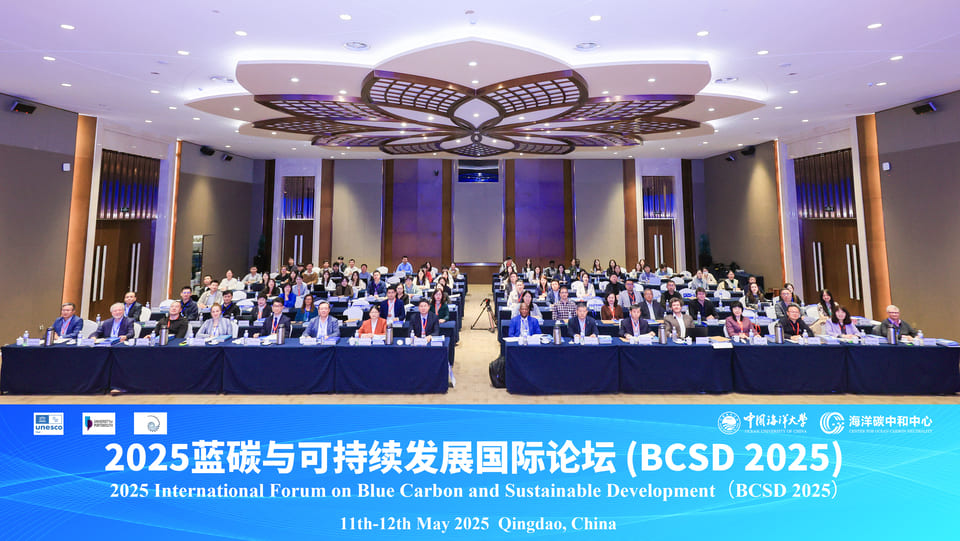
The 2025 UNESCO Chair-International Forum on Blue Carbon and Sustainable Development (BCSD2025), co-sponsored by the IUGG Union Commission on Climatic and Environmental Change (CCEC), co-organized by Ocean University of China, University of Portsmouth, and UNESCO Chair in Ocean Governance was opened during May 11-12 in Qingdao, China. Jianping Li, the Chair of the CCEC, is one of the co-chairs of this international forum. The forum brought together approximately 120 participants from 11 countries, including China, the United States, the United Kingdom, France, Portugal, the Netherlands, South Korea, Nigeria, Rwanda, Pakistan, and Yemen, comprising experts, scholars, and student representatives. Over the two-day event, attendees focused on the theme of „Blue Carbon and Global-Regional Sustainable Development,“ discussing topics such as blue carbon and climate change, blue governance and ocean health under carbon neutrality, and blue carbon finance. The forum aimed to deepen multilateral exchanges and cooperation, integrate global intellectual resources, and jointly contribute blue solutions to global sustainable development.
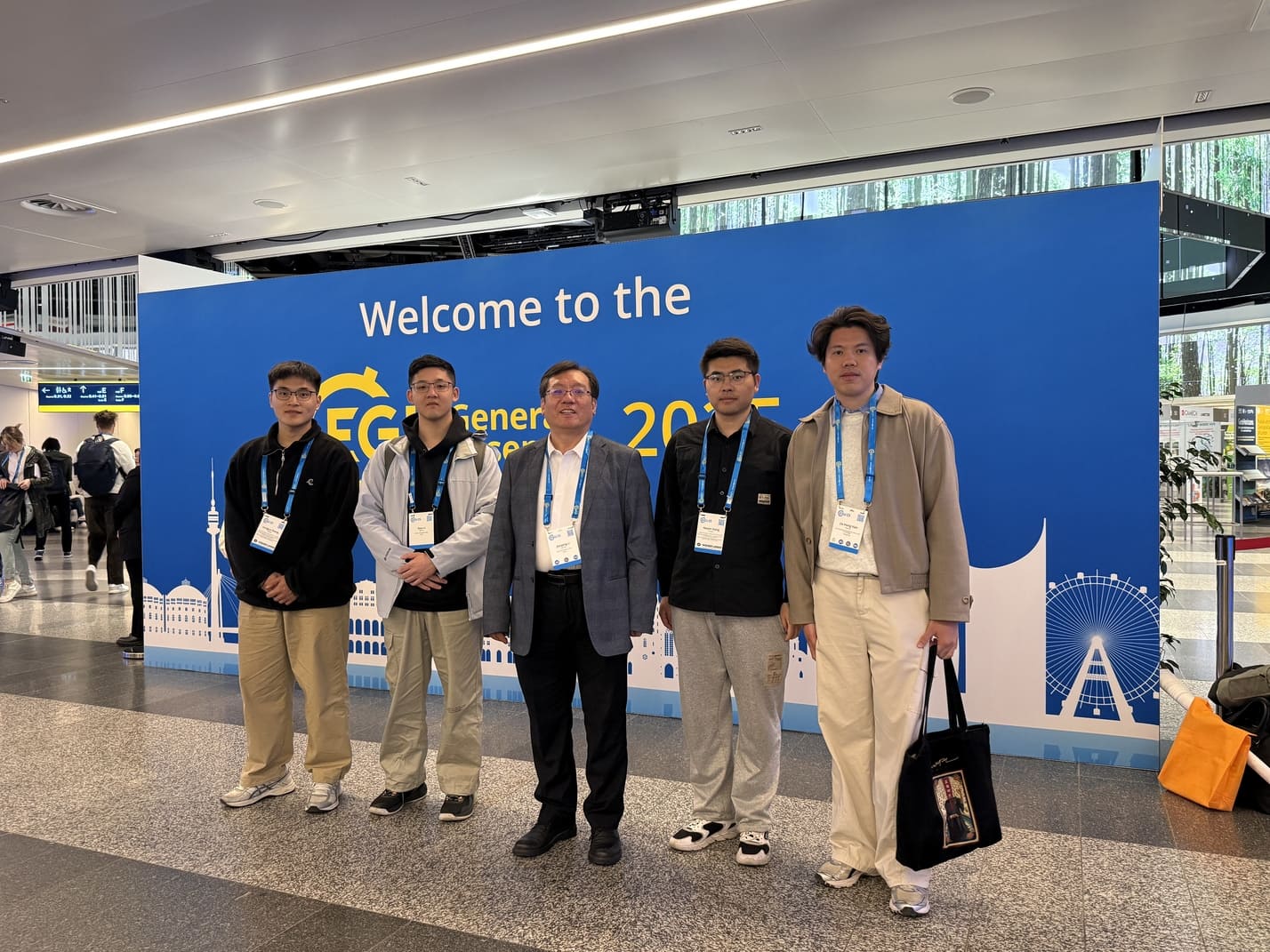
The session was held during the European Geosciences Union (EGU) General Assembly 2025 at the Austria Center Vienna (ACV) in Vienna & online from 27 April to 2 May, 2025. As the Chair of the IUGG Union Commission on Climatic and Environmental Change (CCEC), Jianping Li co-organized it, which aimed to advance the prediction of complex monsoon systems and their global impacts. Presentations were invited on various aspects of monsoon research—including observations, modeling, theoretical studies, field campaigns, and AI/ML applications—to enhance our physical understanding and forecasting capabilities. For further details, please visit the session website.
The three symposia co-organized by the IUGG CCEC were held during Busan IAMAS-IACS-IAPSO (BACO) Joint Assembly 2025 from July 20 to 25, 2025. They are ‘M18-Monsoon systems: variability, processes, predictability, change and extremes’, ‘JMP09-El Niño/Southern Oscillation and its Global and Regional Impacts’, and ‘P04-The Meridional Overturning Circulation (MOC)’, respectively. As the Chair of the IUGG Union Commission on Climatic and Environmental Change (CCEC), Jianping Li co-organized them.
At symposium ‘M18-Monsoon systems: variability, processes, predictability, change and extremes’, Jianping Li served as the lead convener. It was organized with the goal of improving the prediction and projection of monsoon systems by better understanding their variability, dynamics, and physics across scales in a rapidly intensifying climate, and their role in Earth’s energy budget, water cycle, and extreme weather and climate events. Presentations were invited from all areas of monsoon research. See the symposium website for details: https://baco-25.org/new/sub2/sub201.asp
The El Niño–Southern Oscillation, one of the most important drivers on climate variability, has profound climatic, environmental, economical, and societal impacts on both global and regional climate. Symposium JMP09 ‘El Niño/Southern Oscillation and its Global and Regional Impacts’ invited contributions regarding the latest scientific advances on observational, theoretical and modeling studies on: ENSO dynamics, impacts, predictability and prediction, and projected changes and the associated impacts due to projected climate change scenarios. See the symposium website for details: https://baco-25.org/new/sub2/sub201.asp
Symposium P04 ‘The Meridional Overturning Circulation (MOC)’ examined the pivotal role of the Meridional Overturning Circulation (MOC) in global heat, freshwater, and carbon cycles. It addressed critical uncertainties regarding MOC stability under climate change, particularly the divergence between model projections of gradual decline and potential collapse scenarios. Discussions focused on MOC’s societal impacts—including sea-level rise and extreme weather—and sought to advance understanding through integrated observational, theoretical, and modeling approaches to determine future changes and their timescales. See the symposium website for details: https://baco-25.org/new/sub2/sub202.asp
The session was held during the Asia Oceania Geosciences Society (AOGS) Annual Meeting 2025 in Singapore from 27 July to 1 August, 2025. Jianping Li, as the Chair of the IUGG Union Commission on Climatic and Environmental Change (CCEC), co-organized it. It addressed how global warming has intensified extreme weather events and their socioeconomic impacts worldwide. Focusing on ocean (ice)-land-atmosphere interactions, the session invited contributions using integrated approaches—including observations, modeling, and AI/ML applications—to advance understanding of extreme weather in northern hemisphere middle and high latitudes. Specific topics included spatio-temporal characteristics, driving processes, long-term changes, and predictability across multiple timescales. Please visit the session website for more detail: https://www.asiaoceania.org/aogs2025/public.asp?page=sessions_and_conveners.asp
IUGG is one of IPCC Observer Organizations. Prof. Jianping Li, Chair of CCEC, acts as the IUGG Liaison Officer to the IPCC for the term 2023–2027. In this capacity, he was invited by the IPCC to attend its 62nd Session, held from 24 to 28 February 2025 in Hangzhou, China. During the session, the Panel agreed on the outlines for the three Working Group reports of the Seventh Assessment Report (AR7) and the Methodology Report on Carbon Dioxide Removal Technologies, Carbon Capture Utilization and Storage. Please visit the session website for more details: https://www.ipcc.ch/meeting-doc/ipcc-62/
The two sessions were held during American Geophysical Union Annual Meeting 2024 (AGU24) in Washington D.C, USA, from December 9 to 13, 2024. As the Chair of the IUGG Union Commission on Climatic and Environmental Change (CCEC), Jianping Li co-organized them.
At session A070 ‘Decadal Climate Variability: Key Processes of Air-Sea Interaction, Mechanisms and Predictability’, Jianping Li served as the lead convener. This session centered on the key processes of air-sea interaction, mechanisms, predictability and prediction in decadal climate variability. It covered a wide range of topics, including ocean dynamic processes, multiscale air-sea-sea ice interactions, processes and inter-basin interactions on decadal timescales and their impacts as well as decadal climate predictability, numerical simulations and prediction. See the session website for details: https://agu.confex.com/agu/agu24/meetingapp.cgi/Session/239648
Session A015 ‘A015-Ocean-Land-Atmosphere Interactions and Extreme Weather and Climate’ employed integrated analysis, measurement, modeling tools, and artificial intelligence/machine learning frameworks. It sought contributions to advance our understanding of extreme weather and climate in the middle and high latitudes of the Northern Hemisphere. Topics included their spatio-temporal characteristics and precursor signals; the driving dynamic and thermodynamic processes in ocean(ice)-land-atmosphere system; long-term changes and impacts under past, present, and future climate conditions; as well as predictability and prediction methods across time scales ranging from days to multi-decades. For more information, see the session website: https://agu.confex.com/agu/agu24/meetingapp.cgi/Session/239215
At the 60th Session, the delegates reached in a consensus on an ambitious work plan. This plan incorporates contributions from three working groups: the production of a Synthesis Report, a Special Report on Climate Change and Cities, two methodology reports, and updates to technical guidelines on impacts and adaptation. Session website: https://www.ipcc.ch/meeting-doc/ipcc-60/
At the 61st Session, the delegates agreed on some of the critical building blocks for the seventh assessment cycle, including the outlines for a Special Report on Cities and Climate Change and a methodological report on short-lived climate forcers. Session website: https://www.ipcc.ch/meeting-doc/ipcc-61/
The three symposia co-organized by the CCEC were held during the IUGG General Assembly 2023 in Berlin, Germany from July 11 to 20, 2023. They are ‘U01-Geoscience and Mathematics for Sustainable Development’, ‘M06-Monsoon Systems in Rapid and Intensifying Climate Change and Their Role in Extreme Events’, and ‘M10-El Niño/Southern Oscillation and its Regional and Global Impacts’, respectively.
Symposium U01 ‘Geoscience and Mathematics for Sustainable Development’ was co-organized by the IUGG CCEC and CMG. The conveners are Keith Alverson (CCEC/IAMAS) and Alik Ismail-Zadeh (CMG/IASPEI), and the co-conveners are Tom Beer (CCEC/IAMAS), Roberto Carniel (CMG/IAVCEI), Enamundram Chandrasekhar (CMG/IAGA), Salvatore Grimaldi (CMG/IAHS), Ute Herzfeld (CMG/IACS), Jianping Li (CCEC/IAMAS), Trevor MacDougall (CCEC/IAPSO), Malcolm Sambridge (CMG/IASPEI), Tonie van Dam (CCEC/IAG), Ilya Zaliapin (CMG/IASPEI), respectively. The symposium emphasized the role of mathematics and geophysical sciences in sustainable development. Experts demonstrated their contributions to planetary and societal sustainability. Aligned with UN initiatives on Basic Science and Ocean Science, it united IUGG disciplines. The event highlighted how fundamental Earth System science, monitoring, and modelling are crucial for addressing both global pressures and local developmental challenges. For further details, please refer to the symposium website: https://www.iugg2023berlin.org/980-2/
Symposium M06 ‘Monsoon Systems in Rapid and Intensifying Climate Change and Their Role in Extreme Events’ addressed major monsoon system transformations under accelerating climate change. These changes intensified water and energy cycles, leading to more extreme weather. Altered precipitation patterns increased the severity of floods and droughts, with significant societal impacts. The symposium emphasized that understanding monsoon dynamics was crucial for improving predictions. It invited presentations across all areas of monsoon science, including observation, theory, modelling, and forecasting. For more information, please visit the website: https://www.iugg2023berlin.org/919-2/
Symposium M10 focuses El Niño/Southern Oscillation and its Regional and Global Impacts. ENSO, a key climate variability driver with global impacts, shows evolving characteristics like frequency and teleconnections. Its response to warming remains uncertain, prompting diverse projections. This symposium M10 showcased recent advances in ENSO dynamics, impacts, predictability, and projected changes under future climate scenarios. Please visit the conference website for more detail: https://www.iugg2023berlin.org/919-2/
The 5th Congress of China Geodesy and Geophysics (CCGG), organized by the Chinese National Committee for the International Union of Geodesy and Geophysics (CNC-IUGG), was successfully held at Wuhan University in Wuhan, China, from April 21 to 23, 2023. As Vice President of the CNC-IUGG and Chair of the IUGG Union Commission on Climatic and Environmental Change (CCEC), Jianping Li co-organized the congress. Centered on the theme “Earth System Sciences and Large River Sustainable Development”, the conference featured a wide range of topics, including the cryosphere, geodesy, geomagnetism and aeronomy, hydrological sciences, meteorology and atmospheric sciences, physical oceanography, seismology and physics of the Earth’s interior, volcanology and chemistry of the Earth’s interior, as well as interdisciplinary sciences related to these fields. The event attracted over 3,900 participants. For additional details, please visit the congress website: https://ccgg2023.scievent.com/
The session was held during the European Geosciences Union (EGU) General Assembly 2022 at the Austria Center Vienna (ACV) in Vienna & online from 23 to 27 May 2022. Co-organized by Jianping Li in his role as Chair of the IUGG Union Commission on Climatic and Environmental Change (CCEC), the session invited presentations on all aspects of monsoon research in present-day, future and palaeoclimate periods, involving observations, modelling, attribution, prediction, and climate projection. Invited topics spanned from theoretical works based on idealized planets and ITCZ frameworks to the latest field campaign results, and also encompassed research on climate impacts, extremes, NWP modelling, S2S and decadal forecasting, as well as the latest CMIP6 findings. For more information, please visit the website: https://meetingorganizer.copernicus.org/EGU22/session/43913
The 4th Congress of China Geodesy and Geophysics (CCGG), organized by the Chinese National Committee for the International Union of Geodesy and Geophysics (CNC-IUGG), was successfully held at China University of Petroleum (East China) in Qingdao, China, from July 17 to 18, 2021. As Vice President of the CNC-IUGG and Chair of the IUGG Union Commission on Climatic and Environmental Change (CCEC), Jianping Li co-organized the congress and convened the JS03 session „Responses and Impacts of the Atmosphere-Ocean-Cryosphere Tri-sphere Coupling System to Climate and Human Activities“. Centered on the theme “Maritime Silk Road and Earth System Sciences”, the conference covered a wide range of topics, including the cryosphere, geodesy, geomagnetism and aeronomy, hydrological sciences, meteorology and atmospheric sciences, physical oceanography, seismology and physics of the Earth’s interior, volcanology and chemistry of the Earth’s interior, as well as interdisciplinary fields related to the aforementioned areas. The event attracted over 3,300 participants.
At the meeting, Tom Beer summarized CCEC’s activities during the last General Assembly in Prague, which included organizing the session „U1-Future Earth and Sustainability,“ holding its first business meeting, and participating in a panel on the WMO Global Framework for Climate Services. Key accomplishments since then included finalizing the WeatCliFS initiative with the monograph „Global Change and Future Earth“, holding the second CCEC scientific meeting in Luxembourg (2016), and submitting regular reports to IUGG. Keith Alverson reported that CCEC accounts are managed by IUGG and provided the current balance.
Discussions highlighted ways to improve future assemblies, such as adopting overarching themes like the Sustainable Development Goals, increasing visibility for Early Career Scientist presentations, and ensuring key lectures are included in printed programs.
Newly elected officers are: Chair Jianping Li, Vice-Chair Keith Alverson, and Secretary-Treasurer Tonie Van Dam (Luxembourg). Executive Committee members were also appointed, representing multiple IUGG associations. The need for greater gender diversity and the inclusion of co-opted members – such as former chairs and representatives from Future Earth and the WMO – was emphasized.
The CCEC organized several other symposia, including JM01 (IAMAS, IAHS, IACS) “Adapting in the Anthropocene”, JM03 (IAMAS, IAHS) “Advances and Frontier Challenges in Global Monsoon Studies: Dynamics, Convection and Interactions with Hydrological and Land Surface Processes” and M20 (IAMAS) “EL Niño/Southern Oscillation and its Regional and Global Impacts”. As the chair of CCEC, Jianping Li co-organized these symposia.
Contact Information:
The following are current officers of the Commission:
Chair: Jianping Li (China)
Secretary: Tonie van Dam (Luxembourg)